Categories
-

Week of May 5, 2024

Facts Bearly Worth Mentioning

Sunday

They may not look it, but bears are fast. With top speeds over 35 mph, bears can easily outrun even Usain Bolt and match the running speed of horses.

Monday

The sleepy state many bears enter through the winter is technically torpor, a state similar to true hibernation but different in that the bear can still wake up quickly to respond to danger. In either case, it is a very deep sleep, and the bear lives off fat reserves and does not eat, drink, or excrete while it sleeps for months at a time.

Tuesday

The teddy bear was named for President Theodore Roosevelt following a 1902 Mississippi hunting trip when the president refused to shoot a black bear that other members of his hunting party had stunned and tied to a tree, believing such a kill would be wholly unsportsmanlike. The episode was featured in a cartoon showing the adult bear as a cub, and a Brooklyn couple sewed and started selling “Teddy’s bear” plush dolls in their penny shop after getting Roosevelt’s permission. After growing interest, they soon made a fortune selling the bears exclusively.

Tuesday

With males weighting an average of about 1,000 lbs., polar bears are the largest bear and largest land carnivore in the modern world. However, they would have been dwarfed by their extinct Ice Age ancestor the giant short-faced bear, which stood 12 feet tall, weighted over 1500 lbs, and (amazingly) ran 40 mph.

Thursday

One female polar bear was observed to swim for 9.67 days straight in the Beaufort Sea, covering over 400 miles.

Friday

Panda bears are usually a big draw for zoos, but at a steep cost. The Chinese government retains ownership of the pandas and typically charges one million US dollars annual “panda rent” to the institutions exhibiting and researching them.

Saturday

Although red pandas and koalas seem quite bear-like, they aren’t true bears. The unique red panda is the only member of its animal family, and koalas are actually marsupials, like kangaroos.
Categories
-

Week of April 28, 2024

Facts are Forever

Sunday

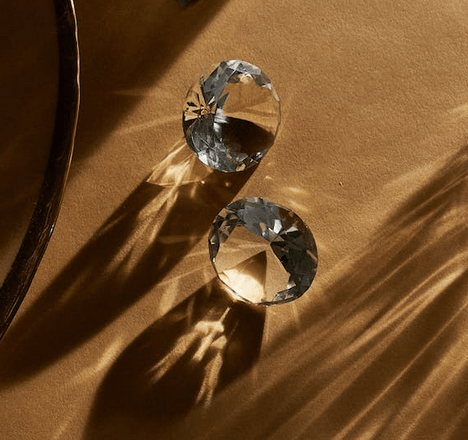
Diamonds originated about 100 miles underground, formed from carbon hundreds of millions of years ago under the phenomenal heat and pressure of the earth’s mantle. The natural channels of volcanic pipes bring the diamonds closer to the surface for mining.

Monday

Though we often see clear diamonds on jewelry, natural diamonds come in almost all colors. The color comes from “impurities” within the carbon structure (trapped nitrogen makes yellow diamonds, for example), and in some cases the diamonds are even colored by radiation exposure.

Tuesday

The regular and uniform seeds of the carob tree were used for centuries as the standard for weighing gems before a 1908 international standardization. The Greek name for this tree is keration, which is where we get carat, the measurement of diamond weight. Diamonds smaller than one carat are measured in points, and there are 100 points to a carat.

Wednesday

The largest diamond ever found was discovered by a mine superintendent in 1905 in Pretoria, South Africa. It weighed 1.33 lbs., or 3,106 carats, and was dubbed the Cullinan after the mine’s owner. Cut into over 100 smaller diamonds, the three largest are now among the British royal stones, and the “Cullinan I” AKA “Star of Africa I” is the largest cut fine-quality diamond in the world.

Thursday

Only about 30% of diamonds mined are gem quality, so the remaining diamonds often find industrial uses due to their exceptional hardness, including cutting, sanding, boring, and coring.

Friday

Most diamond mines are obviously privately-owned, but Murfeesboro, Arkansas, hosts Crater of Diamonds State Park, the world’s only public diamond digging facility. Visitors may search a 37-acre field for diamonds they can keep. For inspiration, consider that the Uncle Sam Diamond, the largest diamond ever found in the US at 40+ carats, was found here.

Saturday

Money may not grow on trees, but research indicates diamonds might rain on other planets. 1000 tonnes of diamonds a year may be created on Saturn alone.

Categories
-

Week of April 21, 2024

Fasten-ating Facts

Sunday

Buttons were used for decoration since at least 5,000 years ago, but only began fastening clothing during the Middle Ages after the development of the button hole.

Monday

Snaps for clothing were first patented in Germany in 1885 and are known as “snaps” or “poppers” thanks to the sound they make when fastened.

Monday

A basic zipper design was patented in 1851 by the inventor of the sewing machine, but the zipper as we know it wasn’t patented until 1917. Though the US Army used them in gear and uniforms in WWI, zippers didn’t start to achieve their widespread status on clothing until mid-century. And if you’ve ever wondered what the seemingly-ubiquitous “YKK” on zippers stands for, it is Yoshida Kogyo Kabushikikaisha, or Yoshida Company, Ltd.

Tuesday

Velcro’s invention was inspired by a Swiss engineer’s 1941 walk in the woods, when his dog got some burrs in his fur. Studying the burrs under a microscope, Georges de Mestral saw the tiny seed pods held strong thanks to hooks in their tips, and after many years he perfected the hook-and-loop design for clothing and shoe fasteners. “Velcro” derives from the French words for “velvet” and “hook.”

Wednesday

Shoelaces are old. A leather cord lacing system has been found on moccasin-style shoes dating back 5,500 years.

Thursday

In the men’s shirt market, cufflinks were somewhat of a transitional fastener between strings, which tied together men’s ruffled cuffs in the early 1500s, and buttons, which replaced cufflink holes on most mass-market dress shirts in the late 20th century. In they heyday of their popularity, they could be very ornate and show wealth and prestige, and are still found on tuxedo and other high-end dress shirts today.

Friday

The buckle was known in ancient Greece and Rome and used for fastening armor, but for much of its life was also an device to ornament or show wealth. Because of the fastener’s reliability, medieval Europe saw more than just the wealthy and elite adopt buckles as new manufacturing techniques made them more available.

Saturday

While the stretchy usefulness of natural rubber has been known for centuries, chemical experiments in the early 1800s improved rubber’s stability and durability. Soon after, elastic strips in clothing began growing in popularity. In 1959, DuPont chemists developed a product created from synthetic material, and spandex and the availability of stretchy clothing expanded (pun intended).

Categories
-

Week of April 14, 2024

Everyday-us Latin pt. 7

Sunday

“Sub rosa” means “under the rose” and means in confidence or secret. It relates to a story in Greek mythology where Harpcrates, the god of silence, was given a rose by Cupid so that he would not reveal certain indiscretions committed by Venus.

Monday

“R.I.P.” is “Requiescat In Pace,” which roughly translates to “May he/she begin to rest in peace.” It is originally more of a request to a higher power for the care of the deceased’s soul than a declaration that the body is at rest.

Tuesday

“Sui generis” means “of its own class” and means something unique.

Wednesday

“Tabula rasa” means “scraped tablet” or “clean slate” and often describes the human mind before being shaped by experience, learning, and influence. It can also refer to a project which can go in any direction, being unfettered to preconceived notions.

Thursday

“In loco parentis” means in “in place of the parents” and refers to someone assuming duties typical of a parent, especially supervision or care.

Friday

“In vitro” means “in glass” and refers to anything done in laboratory conditions (such as in glass test tubes) rather than in a natural setting.

Saturday

“Subpoena” means “under penalty” and refers to things you must produce in a legal matter with a penalty if you don’t. “Subpoena duces tecum” is typically for documents and tangible items, while “subpoena ad testificandium” is for your own testimony in a matter.

Categories
-

Week of April 7, 2024

Facts That Really Measure Up

This week’s facts cover several fun, specialized, older, and lesser-used units of measurement.

Sunday

The British and Irish sometimes give human body weights in “stones.” One stone = 14 lbs., or 6.35 kg.

Monday

The length of a “league” varied widely in Europe, but was generally a distance of 3 miles in English-speaking nations. This unit famously appears in the title of the Jules Verne adventure novel “20,000 Leagues Under the Sea,” but the deepest known point anywhere in the world’s oceans (in the Mariana Trench) is “only” about 2.27 leagues down.

Tuesday

Horse heights are traditionally measured in “hands,” a unit based on the average width of the human hand and equal to 4 inches.

Wednesday

“Fathom” is a traditional unit for water depth, and is equal to 6 feet, or 1.83 meters.

Thursday

A “jiffy” is quick, but how quick depends on your field. For physicists, it is how long light takes to travel a millionth of a millionth of a millimeter. In 1 second, there are about 300 thousand billion billion jiffies. In electrical terms, it is one cycle of an alternating current. The US uses 60Hz, where a jiffy would be 1/60 of a second, or 1/50 in other parts of the world. In the computer world, a jiffy is 1/10 of a second. But by any definition, if you’ve ever said you’ll be “back in a jiffy,” you probably weren’t.

Friday

“Morgen” is German and Dutch for “morning,” so equaled the amount of land that one man behind one ox could till in the morning. This approximate unit was used in early New England and was an official unit in South Africa until the 1970s.

Saturday

A “bushel” is a unit of dry capacity equal to 32 dry quarts. Want more? There are four pecks in a bushel, and two bushels is called a strike.

Categories
-

Week of March 31, 2024

These Facts Toot Their Own Horn

Sunday

Anatomically speaking, horns aren’t antlers and vice versa. Antlers fall off each year and regrow the next, but horns stay put (with the exception of the pronghorn) and grow throughout the animal’s life.

Monday

Before musical horns were metal, they were made of animal horns, hence the name.

Tuesday

Powder horns, where gunpowder was stored and kept dry for Colonial-era weapons, also came from animals, typically cattle.

Wednesday

Before they were more often metal or plastic, shoehorns were made from – you guessed it – animal horn.

Thursday

The term “horny” derived from “having the horn,” a slang term for an erection. Though it previously applied to just men, it can now describe arousal in any gender.

Friday

“Greenhorn” is an inexperienced (and often naive) person, since the new horns of young oxen are green (and by another possible source, the color when an inexperienced jeweler used the wrong temperature to process a piece of horn jewelry).

Saturday

The familiar horned appearance of the Christian devil is largely influenced by the appearance of the Greek god Pan, which itself is informed by the Egyptian god Bes.

Categories
-

Week of March 24, 2024

The Fairest Facts of Them All

Sunday

Reflective “mirrors” of polished obsidian go back about 8,000 years to Anatolia (modern-day Turkey), but the now-familiar mirror, first made of glass with a layer of silver applied to it, was first developed by German chemist Justus von Liebig in 1835.

Monday

The term “smoke and mirrors” for illusion and manipulated appearances only goes back to the 1970s, when political reporter and author Jimmy Breslin described “blue smoke and mirrors” in the perception of political power when writing on the Watergate affair.

Tuesday

Centuries before they were a carnival staple, the original “hall of mirrors” was built in France’s Palace of Versailles. At a time when mirrors were extremely expensive, the 357 mirrors in that room were one of many ways King Louis XIV showed off his wealth and opulence.

Wednesday

Race car driver Ray Harroun was the first to put a rear view mirror on his car in 1911, but he claimed that he got the idea from seeing one on a horse-drawn buggy years before. His adaptation spurred this addition on other vehicles, which was marketed as a “cop-spotter” decades before the invention of the radar detector.

Thursday

In Lewis Carroll’s time, a mirror was also called a “looking glass,” hence the title Through the Looking Glass, his sequel book to Alice in Wonderland.

Friday

There always seems to be a one-way mirror in Hollywood portrayals of a crime suspect being questioned by police (often with a “good cop, bad cop” routine playing out). One-way mirrors are like regular mirrors, but with an especially thin layer of reflective surface, and are also known as “half-silvered mirrors.” These mirrors would be far less effective at being “one way” if not for big differences in lighting between the sides. The room intended to be reflected is kept bright, the room intended to stay hidden is darker, so that most of the light reflected in the first place only comes from one side, where the suspect is usually being grilled.

Saturday

Mirrors aren’t just for light. Acoustic mirrors, usually in the shape of a bowl or parabola, were used in the 20th century to focus and transmit the sound of approaching enemy aircraft before the development of radar. Similar sound-focusing devices, sometimes called “whispering dishes” can still be found at museums, playgrounds, and sporting events.

Categories
-

Week of March 17, 2024

It’s Always Greener

Sunday

All grass is definitely not the same. There are over 10,000 different varieties in the grass family Poaceae, and other plant families with very grasslike members.

Monday

Though most people put grass and flowers in different mental categories, both are angiosperms and hence flowering plants. The tiny inflorescence lawn grass flowers likely won’t make in into your wedding bouquet, though.

Tuesday

Along with watching paint dry, watching grass grow makes the list of very slow-moving things your can watch. So how fast does grass actually grow? In typical conditions, about 1/10 of an inch per day.

Wednesday

Not surprisingly, grass is the major component of lawns, which are somewhat of a national preoccupation in the US. In fact, lawns are the biggest irrigated “crop” in the US, covering an area about the size of Texas at about 63,000 sq. miles.

Thursday

“GIGS” is short for grass is greener syndrome, or the feeling of dissatisfaction when comparing yourself to a circumstance or lifestyle your believe is better than your own. This is based on the old saying “The grass is always greener on the other side.”

Friday

Grassroots political and social movements start from the “ground up” at the community level instead of being “top down” from some existing hierarchy. The first known use of the term came from an Indiana senator in 1912 in describing President Roosevelt’s Progressive Party: “This party has come from the grassroots. It has grown from the soil of people’s hard necessities.”

Saturday

Bluegrass, a unique type of southern music originally employing the mandolin, banjo, fiddle, guitar, and standup bass, was named such after Bill Monroe and the Blue Grass Boys, the first (and very popular) band to pioneer this sound.

Categories
-

Week of March 10, 2024

Random Acronym Week (RAW) #9

Sunday

NASDAQ = National Association of Securities Dealers Automated Quotations

Monday

FLOTUS = First Lady of the United States

Tuesday

DARE = Drug Abuse Resistance Education

Wednesday

PIN = personal (or property) identification number

Thursday

ASAP = as soon as possible

Friday

MADD = Mothers Against Drunk Driving

Saturday

SUV = sports utility vehicle

Categories
-

Week of March 3, 2024

These Facts Give You Wings

Sunday

The specialized wing structure that allows modern birds to fly is believed to have evolved from early theropods, the same dinosaur line that included T-Rex and velociraptor.

Monday

Those little wings pictured on angels and cherubs may be cute, but just wouldn’t be functional. A prehistoric bird similar in size to a modern human male needed a wingspan over 20 feet wide to fly, and even then it likely just glided. Humans would need chest muscles far larger than a pro bodybuilder just to work those wings, not to mention lighter bones and other major anatomical adaptations.

Tuesday

The term “winging it” for improvising with little preparation comes from live theater. It referred to an unrehearsed actor who delivered his lines as prompted by an assistant in the sides or “wings” of the theater, unseen by the audience, or an actor who had just recently learned the lines while in the wings himself.

Wednesday

Likewise, the term “waiting in the wings” has theatrical origins. Someone waiting on these sides of the stage, just behind the curtain, is waiting for their opportune moment to enter.

Thursday

The term “wingman” for a supportive or protective person originated with combat airplane formations, where a wingman flies outside and just behind the lead plane for support and protection.

Friday

A mother hen famously shelters her chicks under her wing for protection, hence the very old idiom “to take under my/your/his/her wing” for protective tutelage.

Saturday

A bird cannot fly with certain feathers of it’s wings trimmed, so the allusion to restricting someone’s freedom by “clipping their wings” has been around since ancient Roman times.