Categories
-

Week of August 15, 2021

Sunday

Boxing rules forbid hitting an opponent below the waist, so both the terms “low blow” and “below the belt,” indicating unfair conduct, come from this sport.

Monday

A bell marks the end of a boxing round but also stops a knockout count, so the term “saved by the bell” indicates being rescued from a bad situation.

Tuesday

A boxer’s trainer can throw a towel into the ring to stop the fight if it is too dangerous for the boxer to continue, so “throw in the towel” means quitting or surrendering an endeavor.

Wednesday

“Down and out” means a knocked-out boxer, or a destitute or defeated-feeling person, as opposed to being “down but not out,” when you’ve taken hits but may still recover.

Thursday

“On the ropes” initially referred to a boxer who has been forced back against the ropes by an opponent with his or her movement also restricted, and is likely in trouble.

Friday

Each boxer has a designated corner where they recover between rounds with their trainer and any other support team members. This is the origin of “to have someone in your corner.”

Saturday

Boxing gloves offer some cushion for both puncher and punched, but when “the gloves are off,” it’s raw, bare-knuckle brawling.

Categories
-

Week of August 8, 2021

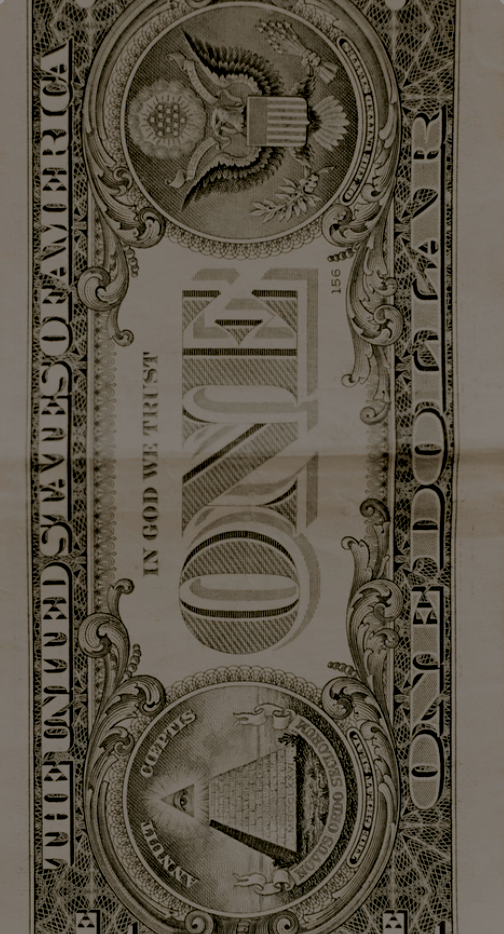
Some symbolism and translations from the familiar American $1 bill. Sources for all info at bottom.

Sunday

Above the pyramid, it says “Annuit Coeptis,” or “Providence has favored our undertakings.” Charles Thomson, who was involved in the original money designs in 1782, explained that this phrase “alludes to the many signal interpositions of providence in favor of the American cause.”

Monday

Below the pyramid it says “Novus Ordo Seclorum,” or “A new order for the ages.” Thomson said this referred to the new form of government which had just been created, and signified “the beginning of the new American Era.”

Tuesday

The eagle holds a banner in its beak reading “E Pluribus Unum,” or “Out of many, one.”

Wednesday

The unfinished pyramid represents “strength and duration” and the eye in the radiating triangle above the pyramid is a Masonic symbol for the all-seeing eye, representing The Great Architect of the Universe.

Thursday

The eagle holds both symbols of war and peace: arrows in his left talon and an an olive branch in his right. This is important in symbology, where the right is considered dominant. Short-lived earlier eagle designs on silver coins showing arrows in the right talon were held by some Europeans as evidence that the young US planned militarily agression. The circles containing the pyramid and eagle together make up both sides of “The Great Seal of the United States.” Notably, Benjamin Franklin considered the eagle to be a bird of “bad moral character” and strongly favored the “more respectable” turkey on the seal instead, while he and Thomas Jefferson both preferred an image of an Egyptian pharaoh chasing the Israelites through the parted Red Sea accompanied by the motto “Rebellion to tyrants is obedience to God,” but these designs didn’t make the final cut.

Friday

Many numbers on the bill are logistical, such as serial number, year of printing, numbers representing the location of printing, plate serial number, and the like, though this information is also useful to help identify counterfeits. Beyond that, look for a lot of thirteens. In the chevron in the middle of the seal of the Department of The Treasury, there are 13 stars in honor of the thirteen original colonies. There are also 13 stars above the eagle’s head representing “a new constellation taking place in the universe,” 13 arrows in the eagle’s left talon, 13 stripes on the eagle’s shield, and 13 rows of blocks in the pyramid.

Saturday

The number 1776, the year when the US was founded, also appears in Roman numerals on the pyramid’s bottom row.

Categories
-

Week of August 1, 2021

Sunday

The state of Louisiana is named for King Louis XIV of France, since French explorer Robert Cavelier de La Salle first claimed the Louisiana Territory.

Monday

The state of Virginia is named for “The Virgin Queen,” Elizabeth I of England, who gave explorer Sir Walter Raleigh permission to colonize it in 1584.

Tuesday

The state of Georgia is named for King George II of England, since the US was not yet a country when this future state was named by Europeans in 1733.

Wednesday

Maryland was named for Queen Henrietta Maria, wife of King Charles I, the English king who granted the charter to form the Maryland colony.

Thursday

King Charles I also granted the charter for the colony of what is now the Carolinas, and they are named after the Latinized version of his name, Carolus.

Friday

Pennsylvania, or “Penn’s Woodlands” is named for William Penn, who granted the land to King Charles II to repay a debt owed by his admiral father.

Saturday

Washington is named for…yep, George Washington, and is the only state named for a president.

Categories
-

Week of July 25, 2021

That Virus

Sunday

“Covid-19” stands for “COronaVIrus Disease 2019”

Monday

Coronaviruses are a class of viruses which have crown-like spikes on their surfaces. “Corona” means crown in Latin and Spanish.

Tuesday

Despite the damage they do to living things, viruses themselves are not technically alive, since they need host cells to survive and reproduce.

Wednesday

The word “quarantine” derives from “quaranta giorini” or “forty days” in Italian. Starting in the 1500s, ships arriving in Venice from ports affected by the bubonic plague had to anchor 40 days and wait before landing, extending the initial 30 day waiting requirement enforced in the city of Ragusa, and this law spread as a protection measure for European coastal cities.

Thursday

“Vaccine” derives from “vaccina,” a name for cowpox virus (vacca = cow in Latin). In a realization that effectively began modern vaccine science, British physician Edward Jenner observed that local milkmaids who’d already had cowpox never got the more pernicious smallpox which frequently ravaged 18th century English towns. He used a preparation of cowpox virus to immunize people against the closely-related smallpox (though modern virologists suspect it was really horsepox providing the immunity).

Friday

Transmission studies of the closely-related SARS CoV-1 virus produced the familiar 6 feet / 2 meter social distancing figure, which was officially made part of CDC guidelines during the 2009 outbreak of the H1N1 virus.

Saturday

Washing / sanitizing your hands reduces their potential as spreaders of viruses and other germs by physically removing or destroying these agents so they don’t remain on your hands and do more damage.

Categories
-

Week of July 18, 2021

In many technical arenas, standard units are named for pioneers in that field. In electricity:

Sunday

The volt, the unit for electric potential, is named for Italian physicist Alessandro Volta.

Monday

The watt, the unit for mechanical and electrical power, is named for Scottish engineer James Watt.

Tuesday

The amp or ampere, the unit for electric current, is named for French physicist André-Marie Ampère.

Wednesday

The ohm, the unit for electric resistance (and impedance), is named for German physicist Georg Simon Ohm.

Thursday

The hertz, the unit for frequency (of one cycle per second), is named for German physicist Heinrich Hertz.

Friday

The siemens, the unit for electrical conductance, is named for either German engineer / inventor William Siemens, or his brother Werner von Siemens.

Saturday

The coulomb, the unit for electric charge, is named for French military engineer Charles-Augustin de Coulomb.

Categories
-

Week of July 11, 2021

Sunday

A short-tempered person is said to “fly off the handle” when upset. This pioneer-era term alludes to an ill-fitting metal axe head coming loose from its wooden handle and going airborne, an obvious danger to those nearby.

Monday

Ballistics is the study of the natural flight paths of unpowered objects; the arcs of everything from stones to bullets and cannonballs. In the military sense, any self-propelled guided missile “goes ballistic” when it is no longer under control and propulsion, and so assumes a natural free-falling trajectory. However, long-range nuclear missiles such as intercontinental ballistic missiles (ICBMs) are designed to fall naturally toward their targets in the final part of their flight, and it was during the American Cold War development of these weapons when “go ballistic” grew as a figurative expression.

Tuesday

Though bulls cannot actually see the color, the term “see red” to describe intense anger may have origins in bullfighting and the bullfighter’s red cape used to incite the bulls to charge. However, the color red has long been associated with high emotion, so the term’s origin may also be unrelated to bullfighting. Interestingly, some research indicates that angrier and more hostile people actually do see the color red more often.

Wednesday

Describing someone as “livid” also invokes a color. This dark bluish or greyish color more recently came to indicate the hue of an extremely angry individual.

Thursday

In Greek mythology, unpunished wrongdoers made the Furies feel, well, furious. This trio of bat-winged, snake-haired goddesses dealt in vengeance, punishment and justice, and they had particular disdain for those who lied, murdered, sinned against the gods, and children who disobeyed or killed their parents.

Friday

However, the ancients would not have understood some modern and technical idioms for intense anger. To “blow a fuse” is to overload an electrical fuse with current beyond its capacity. (The Rolling Stones famously sang about blowing a 50-amp fuse in “You Can’t Always Get What You Want.”)

Saturday

Similarly, to “blow a gasket,” which acts as a seal between metal parts in an engine’s combustion chamber, would result in a steam or liquid release in early engines, and still means very expensive repairs in modern cars.


Categories
-

Week of July 4, 2021

Sunday

WD-40 stands for “Water Displacement, 40th formula,” since the the creators’ 40th experimental recipe fulfilled its intended purpose of preventing corrosion on the Atlas rocket.

Monday

The globally-ubiquitous AK-47 rifle is named for it’s Russian designer Mikhail Kalashnikov (AK = “Avtomat Kalashnikova” or “Automatic device by Kalashnikov”) and 1947, the year of its first manufacture.

Tuesday

In the US, a non-profit company is called a “501(c)(3),” and a tax-advantaged type of retirement account is called a “401(k)” because those are the sections where they’re described in the US Tax Code.

Wednesday

G20 or “The Group of Twenty” is a forum of the world’s major economic nations, and also the European Union, together representing 85% of the world’s economic output.

Thursday

V8 is both the Campbell’s drink made with 8 vegetables and also the name of a very common combustion engine with 8 cylinders arranged in a V shape.

Friday

Men of drafting age during WWII and the Vietnam War wondered if their local draft board might label them “1-A” (available and fit for military service) or “4-F” (unfit for military service) or any classification between. These labels were part of a statutory classification system for would-be soldiers that eventually went up to 5-A.

Saturday

License plates use letters and numbers, and a given state, province, or country will likely never run out of random combinations for their license plates. There are 26 letters in the English alphabet, and ten single numbers (0-9). Hence, for a plate with just 6 character spaces available, the possible combinations for that plate are 36 x 36 x 36 x 36 x 36 x 36, or 2,176,782,336. With “only” 15 million cars registered in America’s most populous state, California, there are plenty of plates to go around, even if the spaces, number and letter positions were more restricted.

Categories
-

Week of June 27, 2021

Sunday

David Bowie grew up, in his words, as “plain old David Jones, a middle-class boy from London’s suburbs,” but as a musician he didn’t want to be confused with Davy Jones, frontman of The Monkees. “Nobody’s going to make a monkey out of you,” said his manager, and David adopted his new surname from American Jim Bowie, real-life creator of the Bowie knife, who was rebelliously portrayed in the 1960 film “The Alamo”….

Monday

…and in 1981, David Bowie recorded the song “Under Pressure” with Queen, a band which was also familiar with name changes. Their dynamic lead singer was born Farrokh Bulsara, and also went by Fred Bulsara until about 1970 when he legally changed his name to Freddie Mercury and the band’s name from “Smile” to “Queen”…

Tuesday

…and in 1984, Queen released a song called “Radio Ga-Ga.” Two years later Stefani Germanotta was born, who was later inspired by the song to adopt the stage name “Lady Gaga”…

Wednesday

…and Lady Gaga happens to be godmother to a son of Elton John, the veteran rocker who was born Reginald Kenneth Dwight…

Thursday

…and who once got a letter about the great influence of his music from Bono of U2, whose real name is Paul Hewitt…

Friday

…and human rights-loving U2 toured for an Amnesty International fundraiser in 1986, sharing the bill with The Police and their singer Sting, real name Gordon Sumner…

Saturday

…who, in his own support of the human rights group, promoted a fundraising album of covers of Bob Dylan’s songs, who himself was born Robert Allen Zimmerman.

Categories
-

Week of June 20, 2021

Sunday

Though they now appear before a movie, they’re called “trailers” because they originally appeared after the film. The first trailer wasn’t even for a movie, but promoted a live musical called “The Pleasure Seekers.”

Monday

Originally, a “blockbuster” was a WWII British bomb powerful enough to destroy a city block. Soon after, the term was adopted to describe a film which grossed revenues of at least $2 million in the US and Canada.

Tuesday

Blockbuster movies often perform well at the “box office.” While the box office is the part of a modern theater which sells tickets to anyone, the term comes from Elizabethan times, when wealthier theater patrons bought tickets to private balcony sections known as “boxes.” Box ticket sales were a good indicator of a play’s financial success, and were sold separately at an office near the theater entrance.

Wednesday

We associate the term “silver screen” with the film world because original movie screens were coated with a reflective metallic paint, since this was better to view the projected images on.

Thursday

Though popcorn was popular at carnivals since the mid-1800s, the first movie theaters wanted to replicate the experience of live theaters, and so didn’t promote snacks like popcorn. However, history intervened and led to the popularization of popcorn in movie theaters. During the Great Depression, the very profitable snack kept many movie theaters in business, since it was both cheap for the cash-strapped movie goers to buy and even cheaper for the theaters to acquire. During WWII, more sugary foods were sent to the soldiers, and traditional growing regions like the Philippines were cut off from the US market, so popcorn didn’t have to compete much with sweeter snacks, further maintaining its theater dominance.

Friday

“Jaws” was the film that, in 1975, created the model for the summer blockbuster, setting the stage for its release with well-timed promotion, merchandising, and soundtrack and source novel. Before Jaws, film audiences typically went to movies in the winter, and the summer was a box office “dead zone.”

Categories
-

Week of June 13, 2021

Sunday

We say that someone showing insincere grief or remorse sheds “crocodile tears.” This term traces back to a questionable report from a 14th century book asserting that crocodiles cry after eating their prey, including humans. Shakespeare and many others bought into the idea of these weeping reptiles. Crocodiles eat in the water, making the observation of extra eye moisture difficult in any era, however, tearing while eating has been observed in some close reptile relatives of crocodiles, such as caimans and alligators.

Monday

In the annual ritual of Yom Kippur, ancient Israelite priests symbolically transferred the sins of their people onto the head of a goat. The animal was then driven into the wilderness or killed, hence the term “scapegoat” for an innocent who bears the blame of others.

Tuesday

There are many versions of the old fable – including one from Aesop – in which a lion and other animals enjoy a successful hunt together only to see the lion take “the lion’s share” of the kill. In all variants, the lion claims most or all of the meal, and in one version even kills a hunting companion, too. The usual lesson of these tales is to be cautious when partnering with those more powerful.

Wednesday

Someone living or eating “high on the hog” is flaunting wealth or status because the most expensive cuts of pork are said to come from the animals’ back and upper legs. By contrast, poorer folk are more likely to buy the belly, feet, and other parts of the animal.

Thursday

Since cows are known to take their sweet time in doing nearly everything, anything that will continue “until the cows come home” will likely take a while.

Friday

The origin of the term “to let the cat out of the bag” to reveal a secret is a more debated idiom, with at least two popular origin theories. In one, the term refers to an old livestock swindle where a jostling bag claimed to contain one or more piglets for sale was revealed to contain a feline instead. The other involves the unsheathing of the brutal “cat ‘o nine tails” whip for maritime punishment in the bygone days of the British Royal Navy, with the sailor exposing the sins of his shipmate being the one to “let the cat out of the bag.”

Saturday

Once established, the social hierarchy of a chicken flock remains fixed, and the more dominant birds keep lower rankers aware of their place with painful pecks. This is the origin of the term “pecking order.”